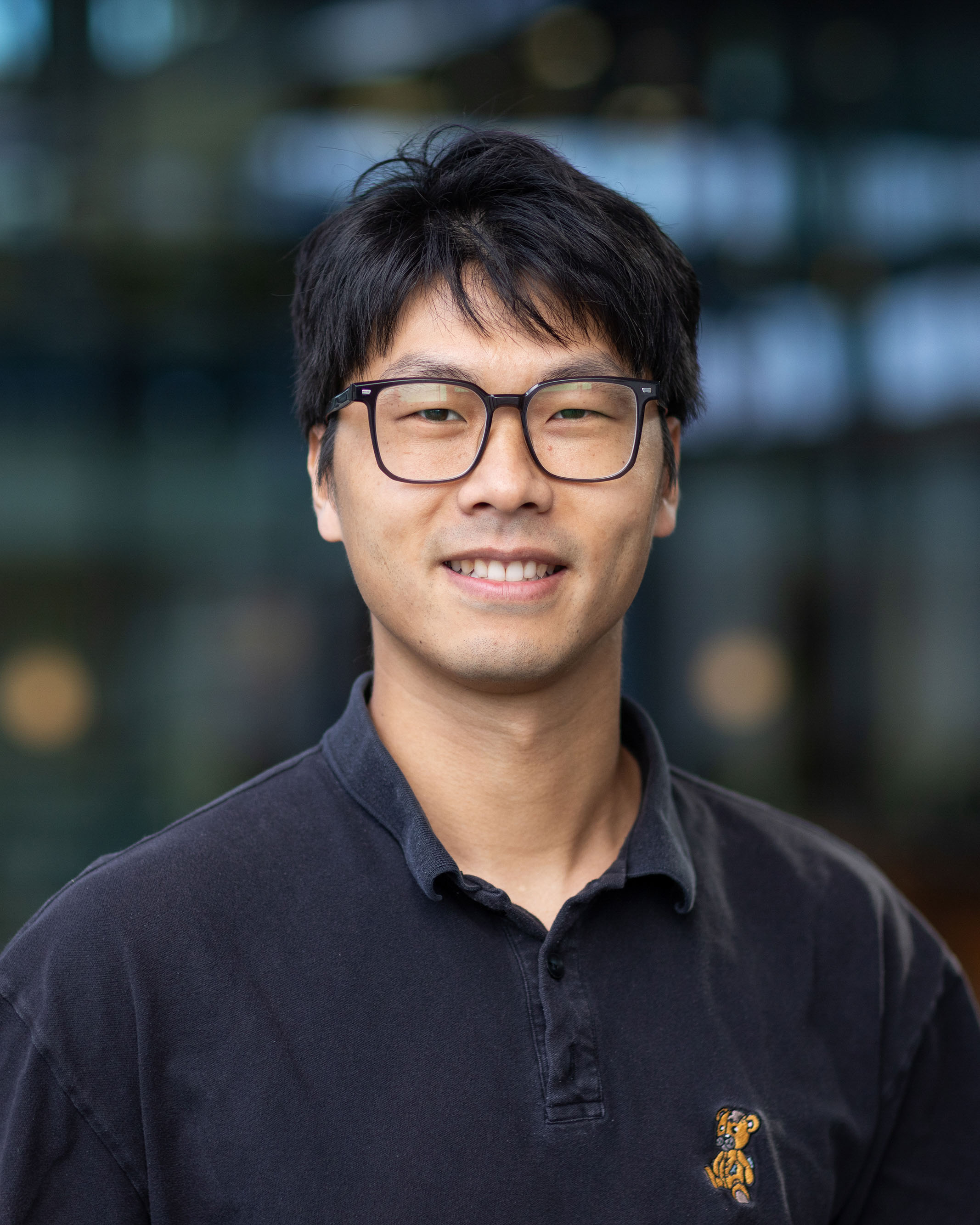
I'm an AI engineer and PhD researcher with 7+ years of building deployable, production-grade ML systems — across healthcare, automotive, and enterprise applications.
My path started in marine electrical engineering in Shanghai, took a turn through a mechatronics exchange in Zeeland, and crystallized at TU/e where I found my home in biomedical signal processing. I followed that thread through fetal-ECG extraction, an MSc thesis on early prediction of necrotizing enterocolitis with Philips, and into industry — building clinical NLP, recommender systems, and on-vehicle conversational AI at Philips Research and NIO.
Now in PhD with Prof. J.-P. Linnartz at TU/e, I'm closing the loop: bringing real-time, low-latency AI to wearables for sleep and circadian-rhythm sensing — where my research and engineering halves finally meet.
Where research questions meet shipped systems.
Estimating circadian phase from PPG and actigraphy with low-latency inference, enabling closed-loop interventions on wrist-worn devices.
Compressed cloud-grade NLP models to run on automotive edge hardware under strict latency and memory budgets.
An embedding-based auto-encoder mapping physicians' free-text clinical concepts to ICD-10 codes, deployed as an API on the Philips clinical platform.
Mathematical modeling of how office-lighting protocols can mitigate the circadian disruption caused by Daylight Saving Time shifts.
Peer-reviewed papers and preprints across medical AI, LLM reasoning, biomedical signals, and circadian science.
5 patents filed across healthcare AI, in-vehicle systems, and LLM evaluation.
Open to research collaborations, consulting on healthcare-AI deployment, and senior algorithm-engineering roles. The fastest way to reach me is email.
mengzhuxu@163.com